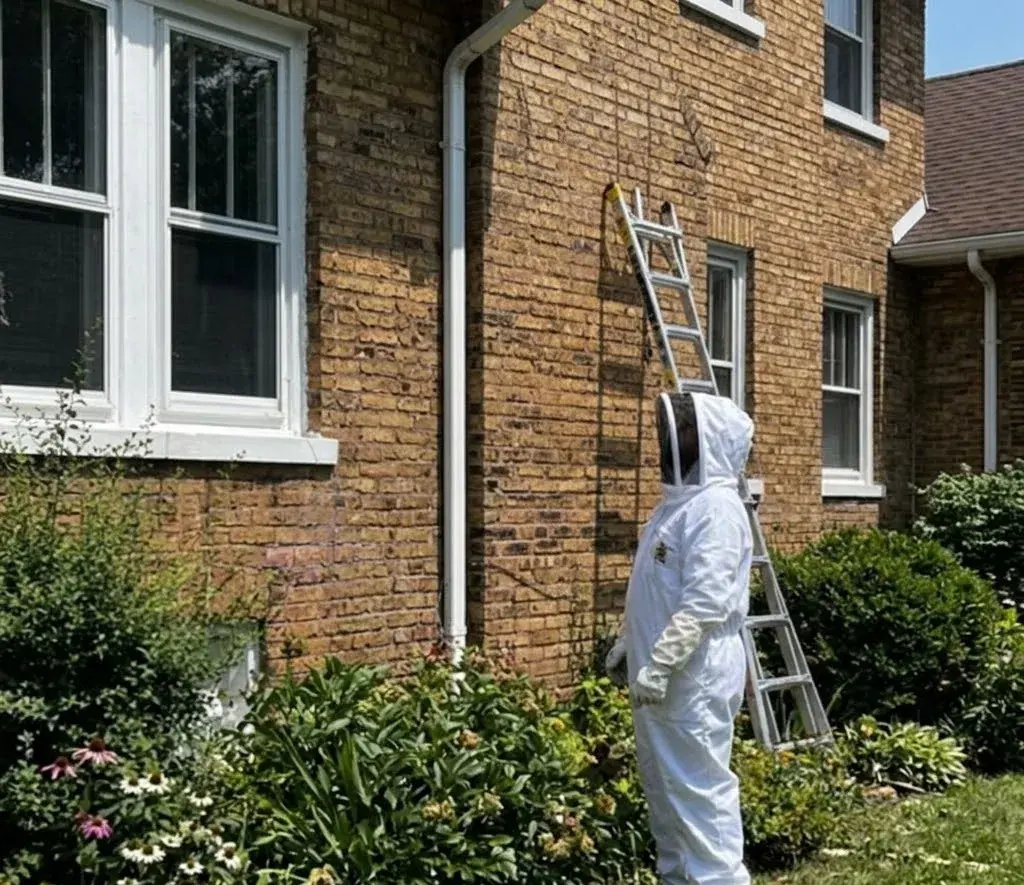
A carpenter ant is not termites with a different name. It does not eat wood for food; it chews out galleries to build a nest, and it will only do that in wood that has already gone soft with moisture. In Georgetown that matters because the two things carpenter ants need most, standing wood and standing damp, both show up in ordinary places around town: an irrigation head that overshoots onto a fence post near Wolf Ranch, a downspout that dumps against a porch beam in Old Town, a shower pan that has been leaking quietly under the tile for a year in a Teravista bathroom. The ant does not create the moisture problem. It finds one that already exists and moves in.
Why This Town Suits Them
Carpenter ants don't consume wood for food. They chew it out to open a gallery, a smooth tunnel system for the colony to live in, and they need that wood already softened by moisture to do it. Georgetown supplies plenty of that starting point: older homes near Old Town and the Square with aging window flashing, newer slab houses around Berry Creek or Cimarron Hills with a shower pan that's been leaking behind the wall for months. Mature trees add another route in, with a satellite nest forming in a rotting limb or stump before workers move toward the house. Frass piling below a wall or sill is usually the first sign anyone notices.
Where the Water Actually Comes From
West of I-35, Sun City and Cimarron Hills sit over limestone with a shallow caliche cap, and that rock doesn't drain straight down the way soil does — water moves sideways through cracks in it until it finds somewhere to surface. That somewhere is often a foundation edge, a low spot by a slab, or the soil right under a window. Add a slab home with a shower pan that's been leaking quietly for months, or flashing above a window that's let water track into the header, and you have the damp wood carpenter ants need, with frass in a windowsill or a closet floor usually the first sign anyone notices.
How to Tell It's Carpenter Ants
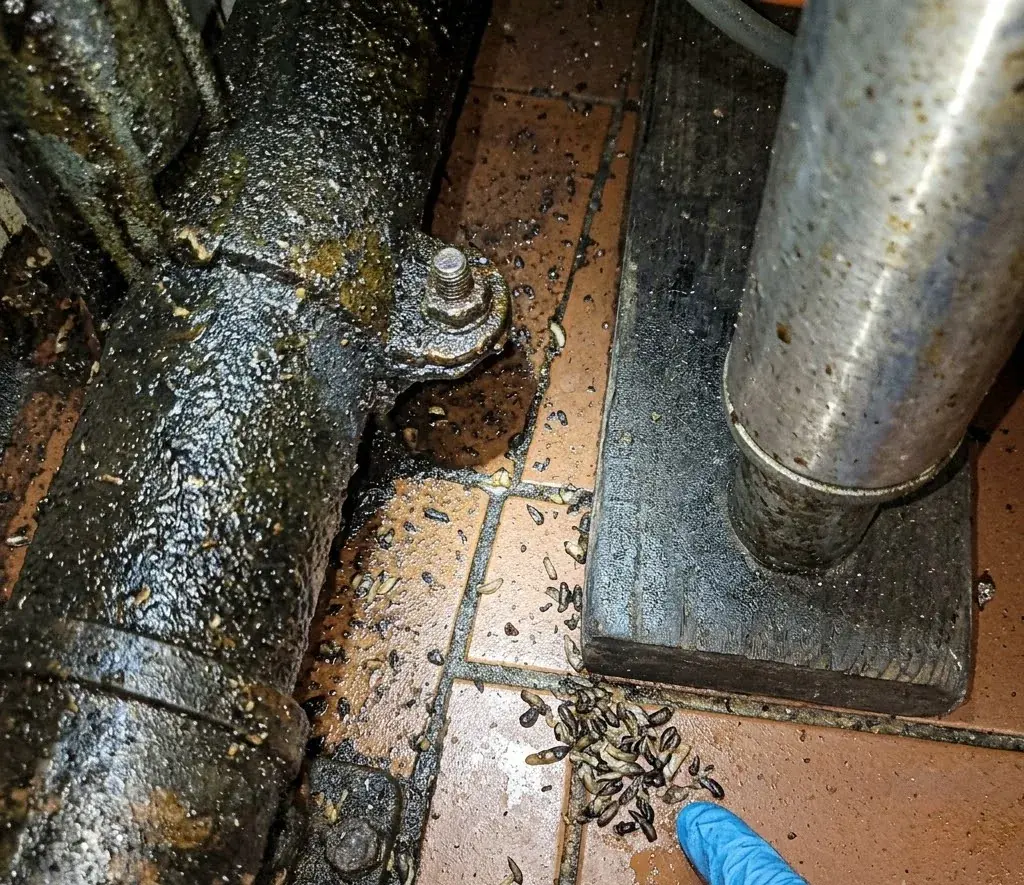
The clearest sign is frass, a mix of wood shavings and dead ant parts that looks like fine sawdust piled at the base of a wall, a windowsill, or under a deck board. It is not the sand-like mud tubes termites build; it is dry, loose, and it means an ant is actively excavating somewhere close by, often behind the exact spot where the pile is found. A second sign is satellite nests: carpenter ants often keep a main colony outdoors, in a stump or a dead tree limb, and send workers into a house to set up a smaller satellite nest near a moisture source. Seeing large black ants indoors in winter, when outdoor foraging drops off, points toward an indoor satellite rather than ants just passing through.
Other Ants That Look Similar
Carpenter ants share space in Georgetown with odorous house ants, acrobat ants, and pharaoh ants, and a homeowner in Sun City or Serenada finding ants in the kitchen is more likely dealing with one of those than a carpenter ant, since carpenter ants tend to stay closer to the moisture source that drew them in rather than trailing across open counters. Size is the fastest tell: carpenter ants are noticeably larger, often a quarter inch or more, dark, and single-node at the waist. Odorous house ants are much smaller and give off a rotten smell when crushed. If the ants are small and everywhere, the wood-moisture story below does not apply.
What the Location Tells You
Because a carpenter ant nest is always sitting on a moisture problem, where the ants show up in a Georgetown house says something about where water is getting in or staying too long. Ants near a bathroom wall point at plumbing or a shower pan. Ants near a window after a run of storms off the San Gabriel River point at flashing. Ants at a deck or porch post point at ground contact and drainage. That link is also why this is a plumbing and drainage question as much as a pest one, and why the licensed pros we connect you with generally want to see where the ants are before treating anything, rather than just spraying wherever ants are visible.
Dealing with this in your home?
Georgetown posts start the same way, and it always shows: a scorpion crossed the tile at midnight, a fire ant mound came up overnight off Williams Drive, something is moving in the attic above Berry Creek. This page pulls those threads apart one at a time — what the striped bark scorpion actually wants, why roof rats never touch your slab, why the San Gabriel doesn't explain the ants. By the end you'll know which of those calls can wait until morning.